
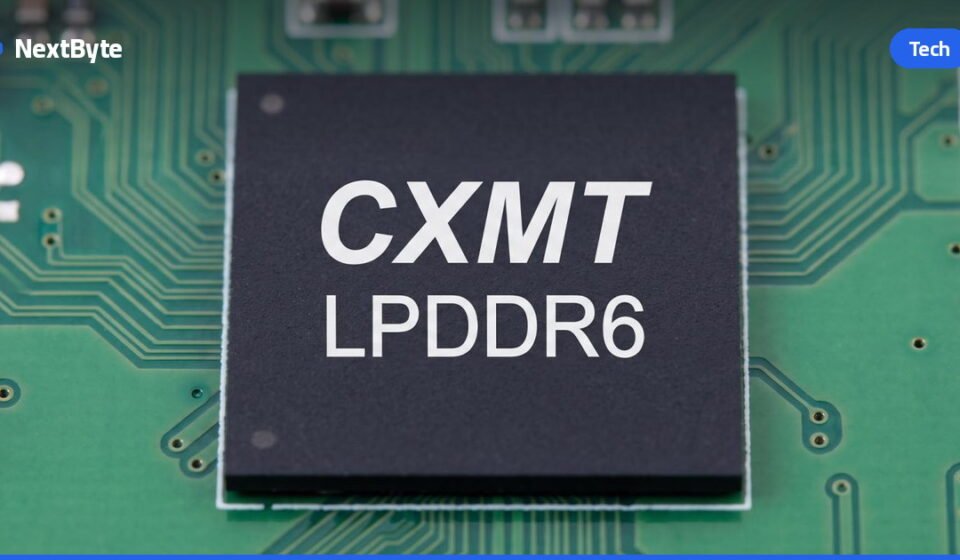

CXMT, a Chinese memory manufacturer, is set to begin LPDDR6 RAM production next month, marking a significant milestone in next-generation mobile memory. The company has already secured design wins with major domestic smartphone makers, including Xiaomi and Huawei, positioning itself ahead of established rivals like Samsung, SK Hynix, and Micron in bringing this technology to market.
Early Wins but Limited Volume for LPDDR6 RAM Production
CXMT’s push to accelerate LPDDR6 RAM production has enabled it to land partnerships with leading Chinese smartphone manufacturers. The company’s ability to outpace substantially larger competitors will likely attract overseas customers eager to race their own products to market. However, volume production isn’t expected to be CXMT’s strength in the near term.

According to reports, LPDDR6 RAM will initially be reserved for the Xiaomi 18 Fold, the company’s upcoming wide-folding handset. The XRING 03 chipset, which powers this device, isn’t expected to cross 300,000 units in overall shipments. This limited adoption reflects the manufacturing complexities involved in producing foldable smartphones, suggesting that Xiaomi won’t be placing massive orders with CXMT—at least not initially. As covered earlier, Samsung Galaxy S26 FE vs S25 FE: Explaining the $50 Price Increase highlighted how premium foldables command steep prices, and Xiaomi likely wants to justify that cost with cutting-edge memory technology.
Manufacturing Constraints and Trade Restrictions
The real bottleneck appears to stem from CXMT’s manufacturing capabilities. While the XRING 03 uses a mature 3nm process that shouldn’t constrain chip orders, mass-producing LPDDR6 memory in substantial quantities presents a significant hurdle. U.S. trade restrictions prevent CXMT from accessing advanced equipment, forcing the company to rely on legacy Deep Ultraviolet (DUV) machinery combined with complex multi-patterning techniques. This approach increases costs and lowers yields, directly limiting production volumes.
CXMT’s real test will arrive when it attempts to scale production beyond these initial design wins. While outpacing Samsung, SK Hynix, and Micron in bringing next-generation DRAM to market is a notable achievement, in a related development, Nvidia Details Groq 3 LPX Architecture and First Third-Party Benchmarks demonstrated how architectural innovation alone doesn’t guarantee market dominance. Similarly, CXMT’s manufacturing constraints suggest that the big three memory makers will likely close the gap quickly as they ramp their own LPDDR6 efforts.
المصدر: Wccftech