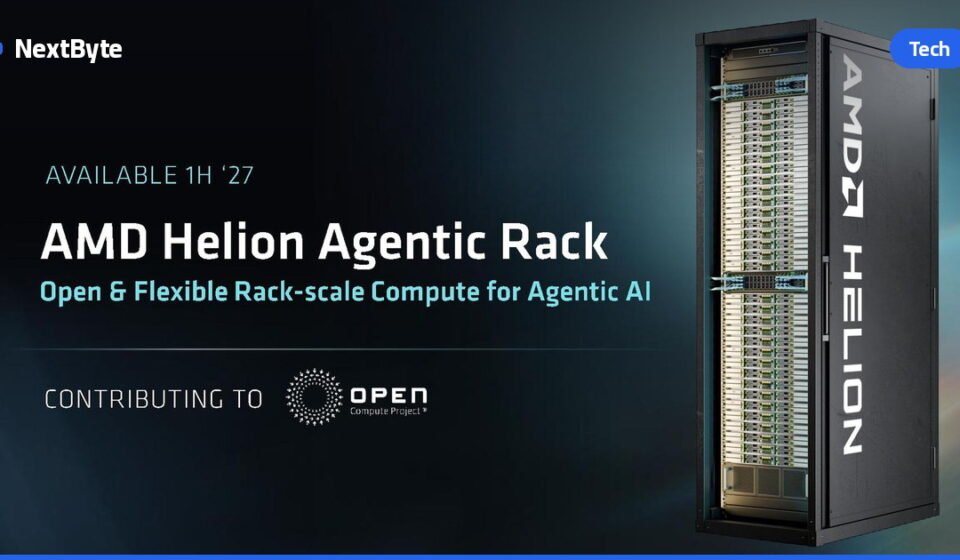

AMD has unveiled Helion, a new reference rack design built around its upcoming Zen 6 CPU architecture, aimed squarely at the data centers powering the AI boom. Unlike AMD’s AI-training-focused Helios racks, Helion is a more flexible, CPU-centric system that can pack a staggering number of processing cores into a single rack — the kind of infrastructure hyperscalers will need as demand for agentic AI tools grows. For American businesses and cloud customers, this is a preview of the hardware that will likely sit behind the next generation of AI assistants and coding tools.
What is AMD Helion Zen 6, and how does it work?
Helion follows the Open Compute Project’s ORv4 rack specification, a format slightly wider and taller than a standard IT rack, and supports 44 OpenU server trays. AMD says the design works with both air cooling and direct liquid cooling, and it’s compliant with OCP’s DC-MHS standard, which is meant to make data center hardware from different vendors interoperable. AMD itself won’t sell these racks — it’s handing the reference design to OCP, and outside manufacturers (OEMs and ODMs) will build and sell the actual product. CEO Lisa Su is expected to name launch partners during a keynote at the OCP Global Summit.
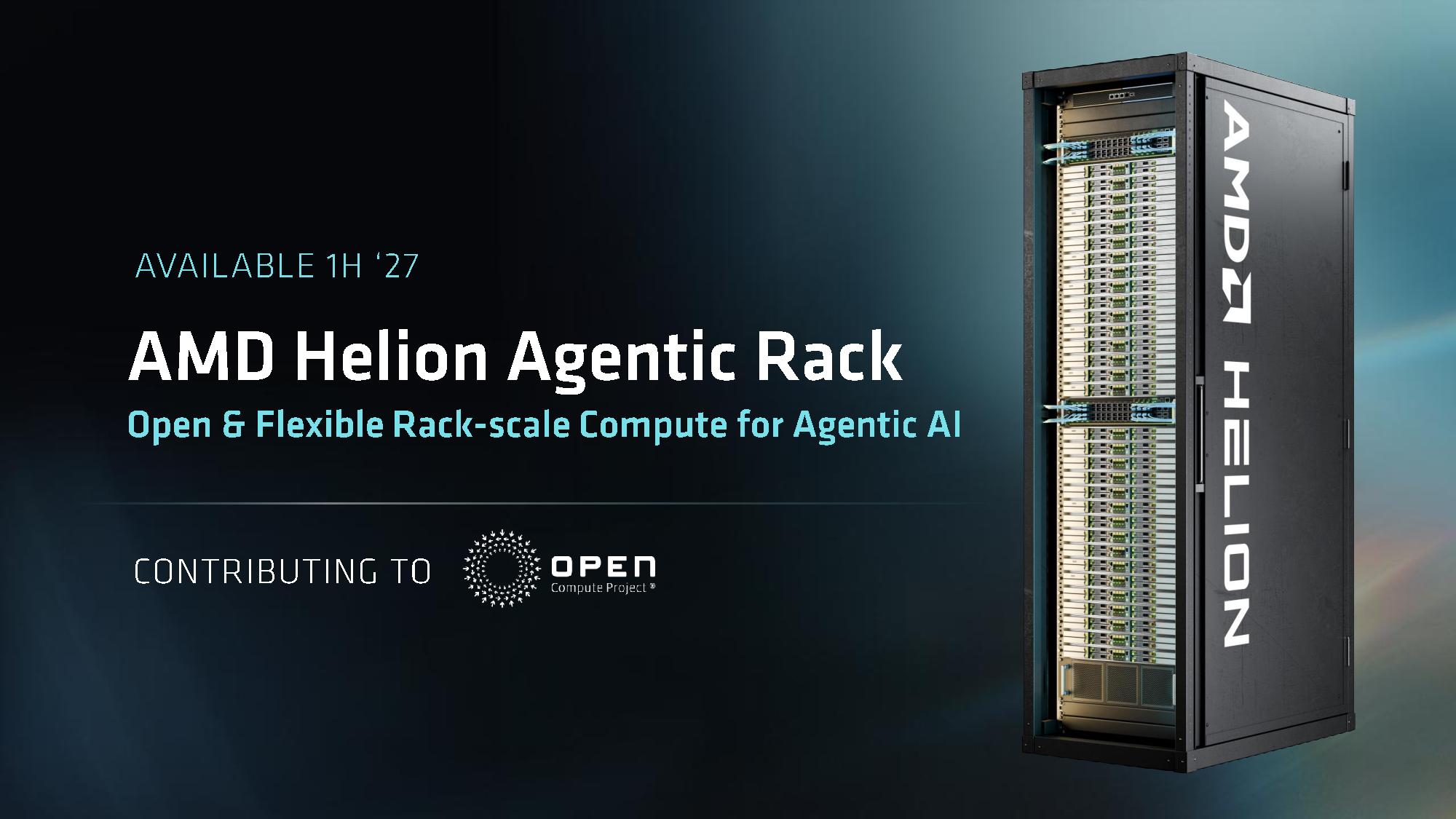
In a pure CPU configuration, a single AMD Helion Zen 6 rack can hold up to 128 EPYC 9996 processors, adding up to 32,768 CPU cores in one rack. That kind of density fits a model already used by companies like Meta and OpenAI for personal AI agents: each user gets a sandboxed slice of compute, while heavier AI inference work happens on separate, dedicated servers. Tasks like building and running software can be handled on CPU-only machines like Helion, keeping the more expensive GPU-based inference servers free for the heaviest AI workloads.
Can it handle GPUs too, and when does it ship?
Helion isn’t limited to CPUs. The same rack can be configured with up to 16 MI350P GPUs and 102 Tbps of networking, though adding GPUs reduces how many CPUs fit in the rack. AMD says this hybrid setup is meant for enterprises that want a single rack handling data management, networking, and AI tasks together, rather than separate systems for each job.
AMD expects Helion racks to become available starting in the first half of 2027, timed to the broader rollout of Zen 6 chips, which are expected to start shipping later this year. The pace of announcements across the industry remains brisk — Nvidia Details Groq 3 LPX Architecture and First Third-Party Benchmarks covered similar momentum on the chip-architecture side recently, while on the consumer hardware front, Samsung Galaxy S26 FE vs S25 FE: Explaining the $50 Price Increase looked at how pricing shifts are playing out for everyday buyers.
المصدر: Tom’s Hardware