
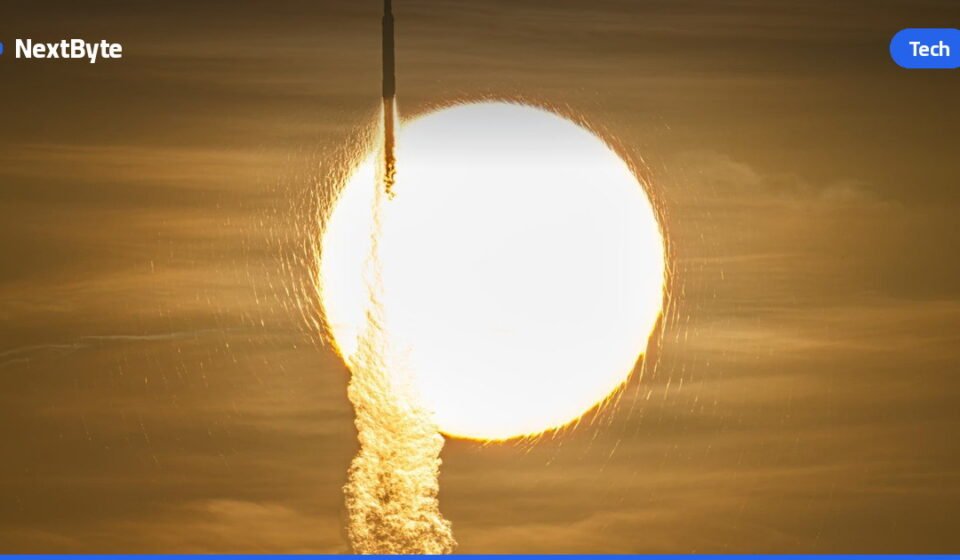

NASA’s Nancy Grace Roman Space Telescope has successfully launched and is now on its way to study dark matter and dark energy. The Roman Space Telescope launch marks a major milestone for the agency after years of funding challenges and a name change. The telescope will conduct an unprecedented survey of the universe from its orbit at the second Sun-Earth Lagrange point (L2), located beyond the Moon, following a three-month, one-million-mile journey.
Unprecedented Survey Capabilities
The Roman Space Telescope launch enables observations that far exceed what current instruments can achieve. With a field of view 100 times larger than Hubble’s, Roman can survey the sky 1,000 times faster than its predecessor using its 300-megapixel infrared camera. This dramatic leap in capability will allow astronomers to map vast regions of the cosmos in detail previously impossible.
Beyond raw survey speed, Roman carries a Coronagraph system designed to block and mask glare from stars. This innovation enables the telescope to directly image exoplanets—including smaller, older, and colder worlds orbiting close to their host stars. This represents a significant advance in our ability to study planetary systems beyond our own.
Mapping the Dark Universe
One of Roman’s primary missions involves creating detailed 3D scans to map the distribution of dark matter throughout the cosmos. By analyzing these scans and gravitational lensing measurements, the Roman Space Telescope launch will help narrow down what dark matter actually is—a question that has puzzled physicists for decades.
The telescope will also use the same 3D mapping techniques to study dark energy and how it has shaped the evolution of the universe over billions of years. According to Nicky Fox, associate administrator for the Science Mission Directorate at NASA, “Roman will be a discovery machine that will bring us closer than ever before to answering humanity’s most profound questions about our cosmic history.”
This follows ongoing advances in space observation technology, as covered when Samsung Galaxy S26 FE vs S25 FE: Explaining the $50 Price Increase explained how manufacturers continue pushing capabilities across different product tiers. Meanwhile, as covered in a related development, Motorola Previews Android 15 Update and New Themed Icons showed how the tech industry continues evolving its approach to user experience and customization.
المصدر: The Verge